

- 14/07/2026
- Dr. Pratik Patil
- 0 Comments
- Blog
Family History of Cancer: Should You Get Screened?
When a family member is diagnosed with cancer, one of the first thoughts that comes to mind is often, “Does this run in our family, and should I get tested?”
It is completely normal to feel anxious about your health when looking at your family tree. However, understanding your genetic risks can transform fear into a proactive health strategy.
Knowing when and how to approach a family history of cancer screening can save lives. As a leading medical oncologist in Pune, Dr. Pratik Patil helps individuals assess their hereditary risks and establish personalized preventive care plans.
Does Cancer Run in the Family?
To understand your true risk, it helps to look at how cancer develops. Only about 5% to 10% of all cancer cases are truly hereditary, meaning they are caused by an inherited gene mutation passed down from a parent to a child.
Most cancers are “sporadic,” resulting from natural aging, lifestyle choices, or environmental factors. Sometimes, multiple family members develop cancer simply because they share a common environment or lifestyle habits, rather than a faulty gene.
When to Get Screened: The Major Red Flags?
If you are wondering when to seek a preventative oncology consultation, you should look for specific patterns in your family history. Dr. Pratik Patil recommends evaluating your lineage for these high-risk indicators:
- Early Age of Onset: Close relatives diagnosed with cancer at a young age (typically under 50).
- Multiple Affected Relatives: Several family members on the same side of the family diagnosed with the same type of cancer (such as breast, ovarian, or colorectal cancer).
- Multiple Cancers in One Person: A single relative who has been diagnosed with more than one primary type of cancer.
- Known Inherited Syndromes: A family history of documented genetic mutations, such as Lynch syndrome symptoms or hereditary breast and ovarian cancer (HBOC).
3 Steps to Map Your Family Cancer History:
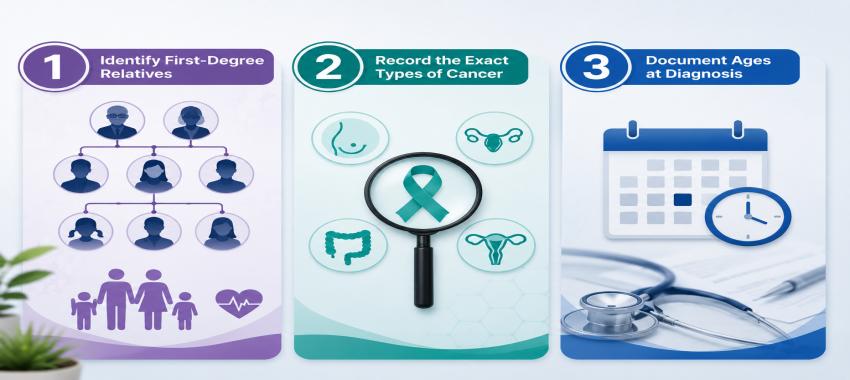
Before sitting down for a cancer risk assessment, you can gather crucial pieces of information to help your medical oncologist map out your risk.
- Identify First-Degree Relatives: Note down any cancer diagnoses among your biological parents, siblings, and children. Next, expand the map to grandparents, aunts, and uncles.
- Record the Exact Types of Cancer: Specific pairings matter. For instance, a combination of breast and ovarian cancers, or colon and uterine cancers, often points toward specific inherited cancer syndromes.
- Document Ages at Diagnosis: Find out exactly how old your relatives were when they were first diagnosed. Early diagnoses are the strongest signs of hereditary cancer.
The Role of Genetic Testing and Counseling:
If a strong family pattern is identified, Dr. Pratik Patil may recommend predictive genetic testing. This is a simple blood or saliva test used to look for specific inherited alterations in your DNA.
What is Genetic Counseling for Cancer?
Before undergoing a test, it is vital to go through genetic counseling for cancer. A specialist helps you understand the genetic testing benefits and risks, what a positive result means for your future, and how it impacts your biological children.
Common Genetic Markers:
Testing can look for specific mutations, such as BRCA gene mutation testing (linked to ovarian and breast cancer) or changes tied to Lynch syndrome, which significantly raises the risk of colorectal and other digestive tract cancers.
A positive genetic test is not a cancer diagnosis. It simply indicates that you have hereditary cancer risk factors, allowing you to take action long before a problem ever starts.
How Screening Changes for High-Risk Individuals?
If you have an inherited predisposition, your preventative cancer care will look very different from standard public health guidelines.
Standard cancer screening guidelines for high-risk individuals shift in three major ways:
- Earlier Screening Starts: While standard colorectal screenings often start at age 45, individuals with a family history may need to start in their 20s or 30s. A common medical rule of thumb is to begin screening 10 years earlier than the youngest cancer diagnosis in the immediate family.
- Increased Frequency: Instead of routine checks every few years, high-risk individuals might require annual checks or surveillance every 1-2 years to catch aggressive mutations early.
- Advanced Technologies: Your protocol may combine multiple, highly sensitive testing tools—such as utilizing breast MRIs alongside traditional mammograms—to maximize early detection cancer screening.
Take Control of Your Health in Pune:
You do not need a cancer diagnosis to sit down with a cancer specialist. Being proactive about a family history of cancer screening gives you the power to control your health narrative.
Whether it involves lifestyle changes, a high-frequency cancer surveillance program, or genetic testing, a customized strategy ensures you get the right care at the exact right time.
If you have questions about your family lineage or want to build a personalized cancer care roadmap, schedule a consultation with Dr. Pratik Patil, a trusted medical oncologist in Pune, to map out your preventative health plan today.