
- 19/05/2026
- Dr. Pratik Patil
- 0 Comments
- Blog
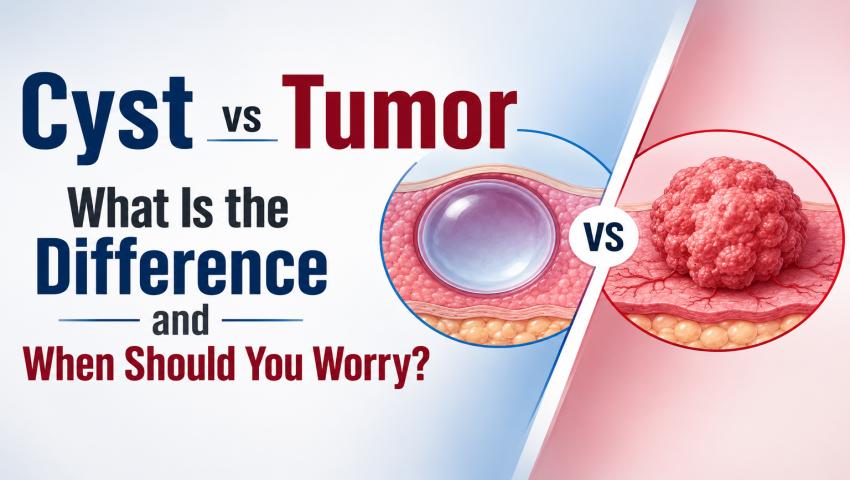
Cyst vs Tumor: What Is the Difference and When Should You Worry?
Introduction: Why People Confuse Cysts and Tumors?
Finding a lump on the body can be one of the most frightening experiences. Your mind immediately jumps to the worst — is it cancer? But not every lump or swelling is something to panic about.
One of the most common confusions people have is understanding the difference between a cyst vs tumor. These two terms are often used interchangeably, but they are very different things. Both may feel like a lump under the skin or inside the body, but their causes, nature, and treatment are completely different.
Dr. Pratik Patil, a leading Cancer Specialist and Oncologist in Pune with over 14 years of experience, regularly sees patients who have either spent weeks worrying unnecessarily — or worse, ignored a warning sign that needed urgent attention.
This blog will help you understand the difference clearly, in simple language, so you know when to relax and when to act fast.
What Is a Cyst?
A cyst is a closed, sac-like pocket of tissue that can form anywhere in the body. It is usually filled with fluid, air, or semi-solid material. Think of it like a small balloon under your skin or inside an organ.
Key facts about cysts:
- Cysts are almost always non-cancerous (benign)
- They have a clear outer wall or membrane
- They can vary in size, from tiny to quite large
- Most cysts are not painful unless infected or ruptured
- They can form in the skin, ovaries, kidneys, liver, and many other areas
- A cyst in the body does not invade nearby tissue or spread to other parts
Cysts are extremely common. In fact, many people have small cysts inside their bodies without ever knowing it. They are usually found during routine check-ups or scans done for other reasons.
What Is a Tumor?
The word “tumor” comes from the Latin word meaning swelling. A tumor is an abnormal mass of tissue that forms when cells in the body start growing and dividing in an uncontrolled way.
Key facts about tumors:
- A tumor in body can be benign (non-cancerous) or malignant (cancerous)
- Tumors are made of solid tissue, not fluid like a cyst
- Malignant tumors can invade surrounding tissues and spread (metastasize) to other organs
- Not all tumors are cancer, but all cancers start as tumors
- A benign tumor grows slowly and usually stays in one place
- A malignant tumor grows faster and can be life-threatening if untreated
Dr. Pratik Patil explains to his patients in Pune that the word “tumor” does not automatically mean cancer. Understanding this distinction helps reduce unnecessary fear and encourages people to get a proper medical evaluation without delay.
Key Differences Between a Cyst and a Tumor:
Here is a simple comparison to help you understand the cyst vs tumor
A painless lump under the skin can be either a cyst or a tumor. This is exactly why you should never self-diagnose. Always get a proper evaluation from a qualified Cancer Specialist like Dr. Pratik Patil.
Types of Cysts — Are They Always Harmless?
Most cysts are harmless, but not all. Here are the most common types:
- Sebaceous Cysts These form under the skin due to blocked oil glands. They are soft, movable, and rarely dangerous. Often mistaken for skin cancer or cyst by worried patients.
- Ovarian Cysts: Very common in women of reproductive age. Most are functional and go away on their own. However, ovarian cancer vs cyst is a real concern — some ovarian cysts can be cancerous, especially in post-menopausal women.
- Ganglion Cysts These appear near joints or tendons, especially in the wrist. They are benign and often painless.
- Kidney Cysts Simple kidney cysts are common in older adults and are usually harmless. Complex kidney cysts need monitoring.
- Dermoid Cysts These are present from birth and can contain hair, skin, or teeth-like material. They are benign but may need surgical removal.
- Scalp Cysts A cancerous cyst on the scalp is actually rare. Most scalp lumps are benign cysts or lipomas. But if a lump on the scalp changes shape, bleeds, or grows rapidly, it must be evaluated for skin cancer or a cyst.
The key message from Dr. Pratik Patil: Just because a cyst is usually harmless does not mean every lump should be ignored.
Types of Tumors — Benign vs Malignant:
Understanding benign tumors vs. cancerous tumors is critical for making the right health decisions.
Benign Tumors:
- Do not invade nearby tissues
- Do not spread to other parts of the body
- Grow slowly
- Usually have a defined border
- Examples: Lipoma (fat tissue), Fibroma (fibrous tissue), Adenoma (glandular tissue)
- Treatment may or may not be needed, depending on the size and location
Malignant Tumors (Cancerous):
- Invade the surrounding tissue
- Can spread through the blood or lymph system to distant organs (metastasis)
- Grow rapidly and unpredictably
- May recur after treatment
- Examples: Carcinoma, Sarcoma, Lymphoma, Leukemia
- Require immediate treatment from an Oncologist in Pune or a specialist
Dr. Pratik Patil emphasises that the only way to confirm whether a tumor in the body is benign or malignant is through a biopsy — a small tissue sample tested in a lab. Never assume. Never delay.
Common Body Areas Where Both Can Appear:
Both cysts and tumors can develop in almost any part of the body. Here are the most common locations:
- Skin — Skin cysts, lipomas, melanoma (skin cancer)
- Breast — Breast cysts, fibroadenoma, breast cancer
- Ovaries — Functional cysts, dermoid cysts, ovarian cancer
- Brain — Arachnoid cysts, brain tumors
- Thyroid — Thyroid cysts, thyroid nodules, thyroid cancer
- Liver and Kidneys — Simple cysts, hepatic tumors, renal cell carcinoma
- Scalp and Neck — Sebaceous cysts, lymph node swelling, lymphoma
- Bones and Muscles — Ganglion cysts, osteosarcoma, soft tissue sarcoma
A lump vs swelling distinction can sometimes help. Lumps are generally solid and localised, while swelling tends to be diffuse and related to inflammation. However, both need evaluation if they persist beyond two to three weeks.
Warning Signs: When a Lump Needs Immediate Attention?
Not every lump or cyst needs urgent care. But these warning signs mean you must see a doctor immediately — preferably a Cancer Specialist like Dr. Pratik Patil:
- A painless lump that is hard, fixed, and not moving under the skin
- A lump that is growing rapidly in size
- Unexplained weight loss along with a lump
- Lump accompanied by fever, night sweats, or fatigue
- A cyst that bleeds, oozes, or does not heal
- Swollen lymph nodes in the neck, armpit, or groin lasting more than three weeks
- A lump on the scalp that is changing colour, shape, or size — rule out skin cancer or cyst
- Abdominal lump with bloating, especially in women — rule out ovarian cancer vs cyst
- Any lump present in a child or teenager
Remember: A painless lump is not always safe. In fact, many cancerous tumors are completely painless in the early stages. This is one of the most dangerous misconceptions Dr. Pratik Patil regularly addresses with his patients in Pune.
How Are Cysts and Tumors Diagnosed?
The diagnostic process typically involves:
1. Physical Examination: Dr. Pratik Patil or any doctor first examines the lump — checking size, texture, mobility, and tenderness.
2. Imaging Tests:
- Ultrasound — Best for distinguishing fluid-filled cysts from solid tumors
- CT Scan — Detailed cross-sectional images of internal organs
- MRI Scan — Best for soft tissue and brain assessment
- X-Ray — Useful for bone-related lumps
3. Blood Tests Tumour marker tests (like CA-125 for ovarian cancer, PSA for prostate cancer) can give additional clues.
4. Biopsy This is the gold standard. A small sample of tissue is taken from the lump and examined under a microscope. Only a biopsy can confirm whether a tumor in the body is benign or malignant.
5. Fine Needle Aspiration Cytology (FNAC) For cysts and some tumors, a thin needle extracts cells or fluid for analysis. It is a quick and minimally invasive procedure.
Can a Cyst Turn Into a Tumor or Cancer?
This is one of the most common questions Dr. Pratik Patil hears from patients. The honest answer is — it is rare but possible.
Most cysts never become cancerous However:
- Some ovarian cysts in post-menopausal women can develop into ovarian cancer
- Certain cysts in the pancreas, known as mucinous cysts, carry a risk of becoming cancerous over time
- A cyst that repeatedly becomes infected or inflamed may need removal to reduce any long-term risk
- A cancerous cyst on the scalp is uncommon but not impossible, especially in areas with chronic sun damage
This is why monitoring is important. Even if a cyst is confirmed benign today, regular follow-up ensures it stays that way. Do not assume that a “confirmed cyst” diagnosis means you never have to think about it again.
Treatment Options — Cysts vs Tumors:
Treatment for Cysts:
- Many small, harmless cysts require no treatment at all
- Infected cysts may need antibiotics or draining
- Large or troublesome cysts are surgically removed
- Ovarian cysts are monitored regularly and removed if they grow large or show suspicious features
Treatment for Benign Tumors:
- Small benign tumors may be monitored without treatment
- Surgical removal if the tumor is pressing on nerves or organs
- No chemotherapy or radiation needed for benign tumors
Treatment for Malignant Tumors (Cancer): This depends on the cancer type, stage, and location. Options include:
- Surgery — To remove the tumour and surrounding tissue
- Chemotherapy — Powerful drugs that kill cancer cells
- Radiation Therapy — High-energy rays to destroy cancer cells
- Targeted Therapy — Drugs that target specific cancer cell proteins
- Immunotherapy — Boosts the body’s own immune system to fight cancer
- Hormonal Therapy — Used for hormone-sensitive cancers like breast and prostate cancer
Dr. Pratik Patil offers all these advanced cancer treatments at his clinic in Pune, making world-class oncology care accessible to patients across Maharashtra.
When to See an Oncologist in Pune?
You should consult an Oncologist in Pune if:
- A lump on the body has been present for more than two to three weeks without explanation
- The lump is growing, changing, or accompanied by other symptoms
- You have a family history of cancer, and develop any new lump
- Your doctor has recommended that you see a specialist after initial tests
- You want a second opinion regarding a diagnosed cyst or tumor
Dr. Pratik Patil, one of the most trusted Cancer Specialists in Pune, provides expert evaluation, advanced diagnostics, and personalised cancer treatment. With over 14 years of experience treating solid cancers, blood cancers, and hematological disorders, Dr. Pratik Patil ensures every patient gets an accurate diagnosis and the right treatment plan.
Conclusion:
Understanding the difference between a cyst vs tumor can save you from unnecessary fear — and more importantly, it can help you take the right action at the right time. Most lumps are benign. Most cysts are harmless. But some are not — and the only way to know for certain is through proper medical evaluation.
Never ignore a lump that persists, grows, or worries you. A painless lump is not always innocent. Early detection and early treatment remain the most powerful weapons against cancer.
If you or a loved one has noticed a lump or swelling that needs evaluation, do not wait. Consult Dr. Pratik Patil — a leading Cancer Specialist and Oncologist in Pune — for expert advice, accurate diagnosis, and compassionate care.