
- 20/05/2026
- Dr. Pratik Patil
- 0 Comments
- Blog
How to Identify Mouth Cancer? Early Signs You Should Never Ignore
Finding a strange spot or a persistent ulcer in your mouth can be worrying. Many people ignore these small changes, thinking they are just common mouth sores. However, knowing how to Identify Mouth Cancer at an early stage can be a life-saving skill. Early detection is the most powerful weapon we have against this disease.
When it comes to expert guidance, Dr. Pratik Patil is a highly trusted Best oncologist with over 14 years of experience. Specializing in oral oncology, he has helped thousands of patients navigate diagnosis and treatment with a focus on precision and patient care. If you are concerned about any changes in your oral health, consulting an expert like Dr. Pratik Patil ensures you get the right advice at the right time.
Why Early Detection of Mouth Cancer Matters?
Mouth cancer is highly treatable when caught early. In the initial stages, the cancer is localized, making it easier to remove or treat with minimal impact on your speech or eating habits. Waiting until the pain becomes severe often means the cancer has spread, requiring more intensive treatments.
What Is Mouth Cancer?
Mouth cancer, also known as oral cancer, occurs when cells on the lips, tongue, gums, or the lining of the cheeks grow uncontrollably. These abnormal cells can form a lump inside mouth or a persistent ulcer cancer mouth that does not heal.
Common areas affected include:
- The tongue (especially the sides).
- The floor of the mouth (under the tongue).
- The inner lining of the cheeks (early-stage cheek mouth cancer).
- The gums (gum cancer).
Common Early Signs of Mouth Cancer to Watch For:
Recognizing the signs of mouth cancer in the beginning is crucial. Often, these signs do not cause pain initially, which is why they are frequently ignored.
Persistent Mouth Ulcers
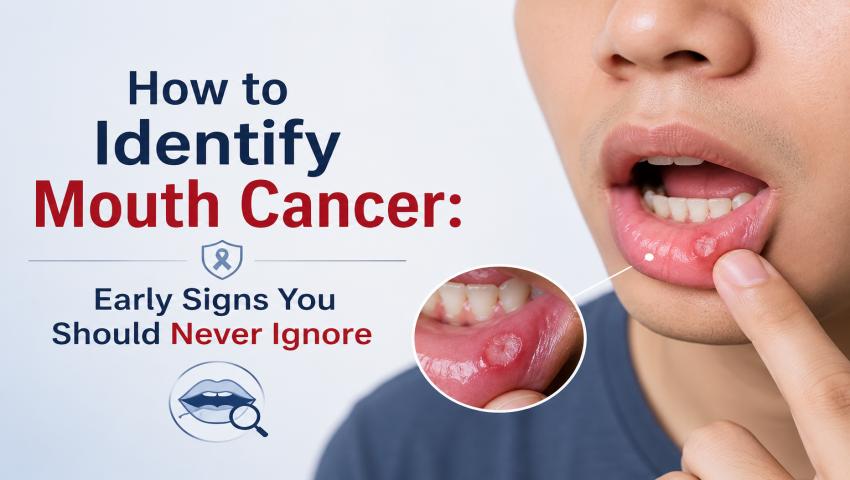
An ulcer cancer mouth typically looks like a common canker sore, but with one major difference: it does not heal within two weeks. If you have a sore that lingers, it needs a mouth cancer examination.
Red or White Patches
Look for velvety red patches (erythroplakia) or thick white patches (leukoplakia) on the tongue, gums, or inner cheeks. These are often "precancerous" signs.
A Lump or Thickening
Feeling a lump inside mouth or a thickening of the cheek tissue that you can feel with your tongue is a significant warning sign.
Difficulty Moving the Jaw or Tongue
If you feel stiffness or pain while chewing, swallowing, or speaking, it could indicate that a growth is affecting the underlying muscles.
Warning Symptoms of Cancer in the Mouth:
As the condition progresses, the symptoms of cancer in the mouth become more distinct. Never ignore the following “Red Flags”:
- Unexplained Bleeding: Frequent bleeding in the mouth without an obvious cause, like a gum injury.
- Loose Teeth: Teeth that become loose suddenly without any underlying gum disease.
- Numbness: A loss of feeling or a tingling sensation in the lip, tongue, or chin area.
- Voice Changes: A persistent hoarseness or a change in the way you speak.
- Ear Pain: Surprisingly, pain in the ear can sometimes be a referred symptom of oral cancer.
- Sore Throat: A feeling that something is “stuck” in the throat that won’t go away.
Who Is at Higher Risk of Developing Mouth Cancer?
Understanding the causes of oral carcinoma helps in assessing your risk. The primary risk factors include:
- Tobacco Use: Smoking cigarettes, bidis, or chewing gutka and khaini is the leading cause in India.
- Alcohol Consumption: Heavy drinkers are at a significantly higher risk.
- Human Papillomavirus (HPV): The Human Papillomavirus (HPV) is a growing cause of oral cancers globally.
- Sun Exposure: Excessive sun exposure is a risk factor for lip cancer.
How Mouth Cancer Is Diagnosed?
If you visit a Mouth cancer specialist, they will follow a specific process to detect gum cancer or other oral malignancies:
- Physical Examination: The doctor feels the neck, lips, and inside of the mouth for lumps.
- Biopsy: A small sample of tissue is taken from the suspicious area and checked under a microscope.
- Endoscopy: Using a thin, flexible tube with a light to look further down the throat.
- Imaging: Scans like CT, MRI, or PET scans help determine if the cancer has spread.
When to See a Doctor for Mouth Cancer Symptoms?
You should book an oral screening immediately if:
- An ulcer or sore lasts longer than 3 weeks.
- You find a hard, painless lump inside your mouth.
- You notice unexplained gum cancer signs, such as bleeding or persistent swelling.
- You have difficulty swallowing (dysphagia).
Can Mouth Cancer Be Prevented? Practical Prevention Tips:
While not all cases are preventable, you can drastically reduce your risk:
- Quit Tobacco: This is the single most effective way to prevent oral cancer.
- Limit Alcohol: Moderation is key.
- Healthy Diet: Eat plenty of fruits and vegetables rich in antioxidants.
- Stay Hydrated: Keeps the mouth lining healthy.
- Sun Protection: Use lip balms with SPF when outdoors.
Importance of Regular Oral Cancer Screening:
An oral cancer screening is a quick, painless check-up where a specialist looks for early changes that the naked eye might miss. For those at high risk (tobacco users), getting an oral screening every six months is highly recommended.
Conclusion:
Mouth cancer is a serious condition, but it doesn’t have to be a death sentence. By staying vigilant and noticing signs of mouth cancer early, you can take control of your health.
If you notice anything unusual, don’t wait for the pain to start. Consult Dr. Pratik Patil, the Best oncologist in Pune, for a thorough evaluation. He provides the expert care needed for early detection and successful treatment.
FAQs About Mouth Cancer Symptoms and Detection:
In Stage 1, the cancer is usually a small growth or sore (less than 2 cm) that hasn’t spread to lymph nodes. It may look like a small red or white patch or a shallow ulcer that doesn’t heal. It is often painless at this stage, which is why regular checks are important.
The definitive test for mouth cancer is a Biopsy. Other diagnostic tests include a Toluidine Blue Stain (a dye test during oral screening), an Endoscopy, and imaging tests like CT scans or MRI to check the extent of the disease.
Yes, gum cancer is highly curable if detected in the early stages. Treatment usually involves a combination of surgery and sometimes radiation or chemotherapy.
No, most mouth ulcers are caused by stress, minor injuries, or nutritional deficiencies and heal within 10 days. An ulcer cancer mouth is one that stays for more than 3 weeks despite basic treatment.