
- 20/01/2026
- Dr. Pratik Patil
- 0 Comments
- Blog
What Is NGS Testing in Cancer and Why Is Everyone Talking About It?
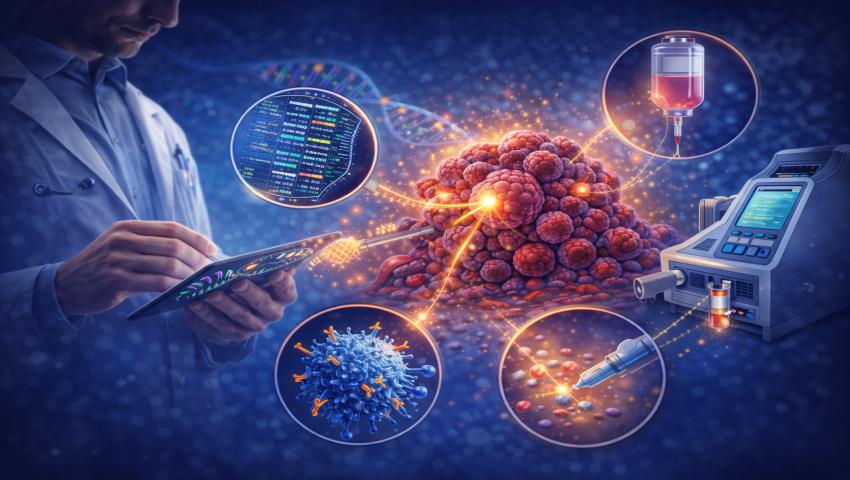
Have you ever wondered how doctors decide which cancer treatment will work best for a patient, or why one treatment helps some while not others? This is where NGS testing is changing cancer care. Drawing from his extensive experience as a leading Pune cancer specialist, Dr. Pratik Patil uses this technology to look deeper into cancer at a genetic level, allowing him to choose more precise and effective treatments tailored to each individual.
In This Blog, You Will Learn...
- What NGS testing in cancer really means?
- How NGS helps doctors personalise cancer treatment?
- Which cancers benefit the most from NGS testing?
- When patients should consider NGS testing?
What Is NGS Test For Cancer:
NGS stands for Next Generation Sequencing. The NGS test full form refers to an advanced genetic test that studies multiple genes in cancer cells at the same time.
In simple terms, NGS testing for cancer looks at DNA changes inside cancer cells. These changes help doctors understand how cancer behaves and which treatment may work best. NGS testing is used to answer one key question
What is NGS testing used for?
It is used to guide personalised and targeted cancer treatment.
How NGS Test For Cancer Works?
NGS testing is performed using:
- Tumour tissue obtained from a biopsy, or
- Blood samples in selected cases
The process happens in four simple steps:
- Sample Preparation: The collected sample is first processed to extract pure DNA or RNA from cancer cells. The genetic material is then broken into very small fragments. Special markers are added to these fragments so they can be easily read by the machine.
- Library Preparation: These prepared DNA fragments are placed on a special surface where each fragment is copied many times. This amplification makes the genetic signals strong enough to be accurately detected.
- Sequencing: The sequencing machine reads the DNA fragments one base at a time. Each genetic building block is identified using advanced imaging technology, allowing hundreds of genes to be analysed at the same time.
- Data Analysis: Powerful computer software puts the genetic data together and compares it with normal DNA.
The final NGS test result highlights specific genetic mutations that may be driving cancer growth.
Based on these findings, doctors can:
- Understand how the cancer behaves
- Identify suitable targeted or personalised therapies
- Avoid treatments that are unlikely to work
This detailed genetic insight is what makes NGS testing for cancer a major step forward in modern cancer care.
Why NGS Is Important in Cancer Care?
Not all cancers behave the same, even if they look similar on scans. NGS helps by:
- Identifying genetic mutations driving cancer growth
- Predicting response to targeted therapy
- Avoiding unnecessary or ineffective treatments
- Improving overall treatment outcomes
- Helping doctors select personalised treatment plans
- Providing access to newer drugs and clinical trials
This is why NGS testing for cancer has become an essential part of modern, precision-based cancer care.
Types of Cancers Where NGS Is Used:
NGS testing is commonly recommended in:
- NGS testing lung cancer
- NGS testing for pancreatic cancer
- NGS test for blood cancer
- Breast cancer
- Colon and ovarian cancers
It is especially useful in advanced or recurrent cancers.
NGS Testing and Targeted Cancer Therapy:
Targeted therapy works only if the right mutation is present.
NGS testing helps doctors match:
- The right drug
- To the right patient
- At the right time
This approach improves success rates and reduces side effects. It is one of the reasons NGS is widely discussed in cancer treatment today.
Benefits of NGS Testing for Patients:
NGS testing offers several patient benefits:
- Personalised treatment planning
- Better treatment response
- Reduced trial-and-error approach
- More treatment options, including clinical trials
Patients receiving the best cancer treatment in PCMC Pune increasingly benefit from NGS-guided therapy.
Limitations and Challenges of NGS Testing:
While NGS is powerful, it has some limitations:
- Not all mutations have approved treatments
- Test availability may vary
- Cost can be a concern for some patients
- Results need expert interpretation
This is why guidance from an experienced cancer specialist is essential.
Who Should Consider NGS Testing?
NGS testing is usually advised for:
- Advanced-stage cancers
- Cancer not responding to standard treatment
- Recurrent cancer
- Patients eligible for targeted or immunotherapy
Your doctor will decide if NGS testing is suitable for your condition.
Role of a Cancer Specialist in NGS Testing:
A cancer specialist plays a key role in:
- Deciding when NGS testing is needed
- Choosing the right type from the different types of NGS testing
- Interpreting the NGS test result
- Planning personalised treatment
Patients often consult the best cancer doctor in PCMC, Pune, to ensure NGS results are used correctly for treatment decisions.
NGS Testing in India – Availability and Cost:
NGS testing is now widely available across major cancer centres in India.
The NGS test price in India depends on:
- Number of genes tested
- Type of cancer
- Lab technology used
On average, the NGS test price can range from moderate to high, but it often helps avoid ineffective treatments, making it cost-effective in the long run.
Conclusion:
NGS testing is changing how cancer is diagnosed and treated. By understanding cancer at a genetic level, doctors are now able to offer more precise, effective, and personalised care instead of a one-size-fits-all approach.
For patients considering advanced testing, guidance from an experienced specialist matters. Dr. Pratik Patil, a Medical Oncologist in Pune with over 12 years of experience, regularly uses evidence-based tools, such as NGS testing, to help plan targeted and personalized cancer treatment. His approach focuses on choosing the right test for the right patient, ensuring clarity and practical benefit at every step.
Discussing NGS testing with a qualified cancer specialist can help open new treatment possibilities and improve long-term outcomes.
Frequently Asked Questions (FAQ's):
In the medical and oncological field, the NGS full form stands for Next-Generation Sequencing. It is an advanced DNA sequencing technology that allows doctors to look at large parts of a patient’s genetic code all at once. Unlike older methods that looked at one gene at a time, NGS can scan hundreds of genes simultaneously to find specific mutations that drive cancer.
NGS testing analyses genetic changes in cancer cells to guide personalised treatment.
It helps select targeted therapies and improves treatment outcomes.
Lung, pancreatic, blood cancers, and many advanced solid tumors benefit from NGS testing.
NGS provides deeper genetic insights but complements, not replaces, biopsies.
The NGS test price in India varies based on test type and lab, but it is increasingly accessible.
Yes, NGS testing is crucial for identifying mutations that respond to targeted treatments.