
- 20/01/2026
- Dr. Pratik Patil
- 0 Comments
- Blog
Is Autophagy Good or Bad for Cancer?
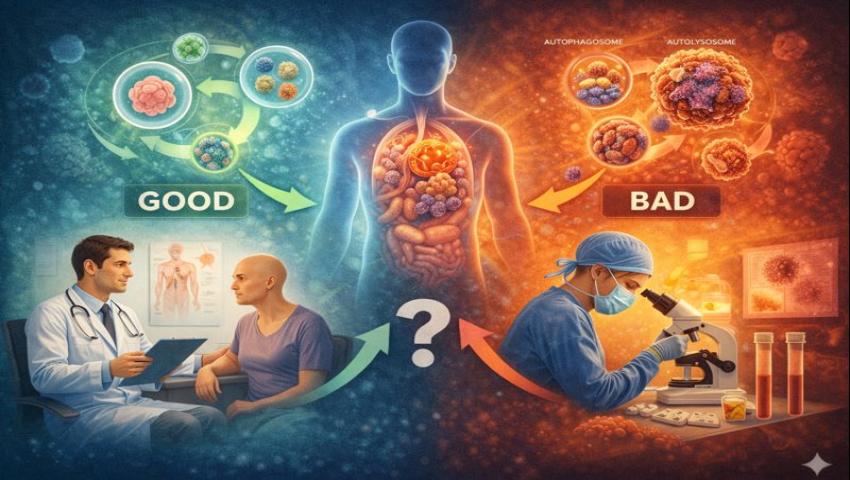
Can the same process that protects your body also help cancer grow?
That’s the big question around autophagy — the body’s natural “cell-cleaning” system that sometimes prevents cancer… and sometimes helps it survive.
Understanding this dual role is important, especially as new research is turning autophagy into a major therapeutic strategy for anticancer therapy.
With growing awareness, patients often seek expert guidance. Dr. Pratik Patil, a leading Cancer Specialist with over 12+ years of experience in treating solid and blood cancers, is known for his expertise in immunotherapy, targeted therapy, and advanced cancer research trends. His evidence-based approach helps patients understand complex topics like autophagy in a simple and practical way.
Highlights:
What autophagy really is and how it work?
– When autophagy slows cancer… and when it supports cancer growth?
– How does it affect metastasis, drug resistance, and cancer stem cells?
– What research says about autophagy and fasting?
What Is Autophagy?
Autophagy is the body’s natural recycling system. The literal autophagy meaning refers to “self-eating,” where the body forms tiny structures called autophagosomes that collect damaged proteins and clean them out.
In simple words, autophagy helps cells stay healthy by removing waste and preventing early tumorigenesis. Many people explore autophagy fasting as a way to trigger this process, as it may help the body efficiently clear out cellular debris and maintain better overall health.
How Autophagy Protects Healthy Cells?
Autophagy benefits the body by:
- Removing damaged cell parts
- Reducing inflammation
- Lowering oxidative stress
- Preventing unhealthy mutations
At this stage, autophagy works like a natural shield and reduces the chance of cancer forming.
When Autophagy Supports Cancer Growth?
Once cancer develops, the same process may start helping cancer cells survive.
Cancer cells use autophagy to:
- Live longer in stressful environments
- Survive low oxygen and poor nutrition
- Grow faster during treatment
This is why researchers say autophagy has a “dual role” in autophagy, cancer, and survival.
Autophagy, Metastasis & Chemoresistance:
High autophagy activity can make cancer more aggressive. When cancer cells face stress — such as low oxygen, poor nutrition, or chemotherapy — they activate autophagy to survive. This increased activity is closely linked to:
- Faster metastasis: Autophagy gives cancer cells extra energy and protection, helping them travel and settle in other organs.
- Higher drug resistance: Cancer cells use autophagy to break down damaged parts and recover quickly, reducing the impact of chemotherapy drugs.
- Poor chemotherapy response (chemoresistance): Tumors can “self-repair” through autophagy, allowing them to survive even strong treatments.
Because of this survival advantage, tumors with high autophagy levels grow faster, spread sooner, and often return after treatment. This is why modern cancer research focuses heavily on blocking or modifying autophagy to improve treatment success.
Autophagy in Cancer Stem Cells:
Cancer Stem Cells (CSCs) are the “root cells” of a tumor — the small group of cells responsible for restarting cancer growth, causing relapse, and driving metastasis. Autophagy plays a major role in keeping these powerful cells alive.
How Autophagy Helps CSCs
- Survival & Stress Resistance: CSCs activate autophagy to recycle proteins, lipids, and damaged cell parts. This gives them energy and protection during harsh conditions like chemotherapy, radiation, or low nutrients inside tumors.
- Maintains Stemness: Autophagy helps CSCs maintain their “stem-like” qualities — the ability to self-renew and create new cancer cells — which is one of the reasons tumors can regrow after treatment.
- Drug Resistance: By clearing damaged components and repairing themselves quickly, CSCs become highly resistant to standard treatments. This contributes to tumor persistence and treatment failure.
- Metabolic Adaptation: CSCs have high energy demands. Autophagy supports their metabolism, helping them maintain redox balance and survive even in oxygen-poor or nutrient-poor environments.
Because of these roles, autophagy in CSCs is closely linked to relapse, metastasis, and treatment resistance. This is why targeting autophagy in cancer therapy — either inhibiting or modulating it — is being explored as a promising strategy to eliminate CSCs more effectively.
Autophagy Inhibitors & Modulators:
Researchers are now testing autophagy modulators and autophagy inhibitors cancer treatments to block cancer survival pathways.
These medicines aim to weaken cancer cells, so chemotherapy works better.
Common research directions include:
- Blocking autophagy to make cancer cells more sensitive
- Modifying autophagosomes to limit tumor repair
- Combining inhibitors with standard anticancer therapy
Targeting Autophagy in Cancer Therapy:
Targeting autophagy has become an important strategy in modern cancer treatment because autophagy plays a dual role — sometimes helping cancer survive, and sometimes helping cancer die. Therapies now aim to control autophagy based on how a specific tumor behaves.
How doctors target autophagy in cancer therapy?
1] Inhibiting Autophagy When It Helps Tumor Growth:
Some cancers use autophagy as a survival tool.
They use it to:
- Repair damaged cells
- Resist chemotherapy
- Support metastasis and relapse
Autophagy inhibitors (like chloroquine/hydroxychloroquine in trials) aim to block this survival mechanism and make cancer cells more sensitive to treatment.
2] Activating Autophagy When It Helps Kill Cancer Cells:
In certain cancers, strong induction of autophagy can push tumor cells into a self-destructive mode.
This approach is used when:
- Cancer cells are highly stressed
- Autophagy activation leads to “autophagic cell death.”
This strategy is often explored with targeted therapy and immunotherapy.
3] Combination Therapy: The Most Promising Approach:
Because cancer cells adapt quickly, the most effective method is often a combined approach, such as:
- Autophagy inhibitors + chemotherapy
- Autophagy modulators + immunotherapy
- Autophagy-targeted drugs + radiotherapy
This makes cancer cells less resistant and more vulnerable to multiple treatment pathways.
Why Targeting Autophagy Matters?
Controlling autophagy allows doctors to:
- Reduce treatment resistance
- Improve response to chemotherapy
- Slow down metastasis
- Target cancer stem cells
- Personalize therapy based on tumor biology
This is why autophagy-based treatment is emerging as an important direction in modern anticancer therapy.
Autophagy and Fasting – What Research Shows?
Many people ask about autophagy and fasting, especially for cancer.
Research shows:
- Short fasting periods may increase autophagy
- Fasting may reduce the side effects of some treatments
- Fasting autophagy cancer benefits still require more evidence
Doctors strongly advise cancer patients not to fast without medical supervision.
Latest Research on Autophagy’s Dual Role:
Recent studies reveal that autophagy can be both:
- Tumor-suppressing in early stages
- Tumor-supporting in advanced stages
New research focuses on understanding when to boost autophagy and when to block it.
This will help create better anticancer therapy strategies in the future.
Is Autophagy Good or Bad for Cancer? Final Takeaway?
Autophagy is both good and bad, depending on when it happens.
Why Autophagy Is Good?
Before cancer forms, autophagy protects the body by:
- Clearing damaged cells
- Reducing inflammation
- Preventing early tumor growth
So in the beginning, autophagy acts like a natural defence system.
Why Autophagy Becomes Bad?
After cancer develops, tumor cells start using autophagy to:
- Survive treatment
- Repair damage
- Grow in harsh conditions
- Spread and recur
In this stage, autophagy becomes a survival tool for cancer.
Short Answer:
Autophagy is good for preventing cancer, but bad when cancer uses it to stay alive. This is why doctors focus on targeting or blocking autophagy carefully in modern anticancer therapy.
Conclusion:
Autophagy plays a double role in cancer: it protects healthy cells but also supports cancer cells when tumors grow. By understanding this balance, researchers are developing smarter treatments using inhibitors, modulators, and targeted therapy approaches.
With ongoing studies, autophagy may soon reshape how cancer is treated in the future. If you have more questions about advanced cancer care, you can call +919637439163 or book an appointment with Dr Pratik Patil to discuss your treatment options.
FAQs About Is Autophagy Good or Bad for Cancer:
Both. It can prevent cancer early on, but may help cancer survive in later stages.
Cancer uses autophagy to stay alive during stress, grow faster, and resist treatment.
Yes. Increased autophagy is linked to chemoresistance, making treatment less effective.
They can. These drugs block cancer survival pathways and improve therapy response.
It may affect treatment response, but cancer patients should avoid fasting without doctor’s supervision.
Autophagy helps cancer cells survive and migrate, which increases metastasis.
Yes. Blocking or modifying autophagy is now being explored as a powerful anticancer strategy.
Yes. In healthy individuals, it effectively cleans cells to prevent tumor formation. However, in established cancer, it is a double-edged sword—it can help cancer cells survive stress. Its success as a treatment tool depends on the stage of the disease.
It works like a cellular recycling system. Cells create “bags” (autophagosomes) to collect waste, then merge them with “recycling centers” (lysosomes) to break down the debris into energy and new building blocks for the body.