
- 07/04/2026
- Dr. Pratik Patil
- 0 Comments
- Blog
Does a Thyroid Lump Always Mean Cancer? Know the Truth
The short answer is no. Finding a lump in your neck can be scary, but a thyroid lump does not always mean cancer. In fact, more than 90% to 95% of thyroid nodules are benign (non-cancerous) and often do not require aggressive treatment.
Introduction:
If you have discovered a swelling or a lump on the left side of your neck with no pain, it is natural to feel anxious. However, medical statistics are on your side. While most of these growths are harmless, any new development in the thyroid gland area should be evaluated by a professional to rule out rare cases of malignancy. When seeking an expert opinion, it is best to consult the Best Medical Oncologist in your area. Dr. Pratik Patil, a highly respected oncologist in Pune with 14 years of experience, specializes in the accurate diagnosis and advanced cancer treatment of head and neck conditions. Based at Jupiter Hospital, Baner, he provides the clarity and care needed to distinguish between a simple nodule and something more serious.
What Is a Thyroid Lump (Thyroid Nodule)?
A thyroid lump, medically known as a thyroid nodule, is an abnormal growth of cells within the thyroid gland. This butterfly-shaped gland sits at the base of your neck, just below the Adam’s apple.
These nodules can be:
- Solid: Made up of a mass of cells.
- Cystic: Filled with fluid.
- Mixed: A combination of both fluid and solid components.
Many people only discover these lumps while looking in the mirror, buttoning a collar, or during a routine medical check-up.
Is a Thyroid Lump Always Cancer?
As mentioned, the vast majority of thyroid nodules are benign thyroid lesions. The presence of a nodular lesion is actually very common, especially as people age. By age 60, nearly half of the population may have a small thyroid nodule that they aren’t even aware of.
Common non-cancerous causes include:
- Colloid Nodules: Overgrowths of normal thyroid tissue.
- Thyroid Cysts: Fluid-filled sacs that are almost always benign.
- Inflammatory Nodules: Caused by chronic inflammation (thyroiditis).
- Multinodular Goiter: An enlarged thyroid gland consisting of many benign nodules.
Can Benign Tumors Turn Into Malignant Ones?
In the case of the thyroid, most benign thyroid lesions stay benign. They generally do not transform into cancer. However, in very rare instances, a long-standing nodule might undergo genetic changes or hide a small focus of cancer. This is why Dr. Pratik Patil emphasizes regular monitoring through ultrasound to ensure no suspicious changes occur over time.
When Does a Thyroid Lump Suggest Cancer?
While most are harmless, certain “Red Flags” should be taken seriously. You should seek an immediate consultation if you notice:
- Rapid Growth: The lump is getting bigger quickly over a few weeks.
- Hard Texture: A nodule that feels very firm or “fixed” and doesn’t move easily under the skin.
- Voice Changes: Persistent hoarseness or a change in your voice.
- Difficulty Swallowing: A feeling of a lump near the throat under the chin that makes eating uncomfortable.
- Swollen Lymph Nodes: Enlarged lymph nodes or thyroid swelling that persists on the sides of the neck.
Distinguishing between a thyroid or lymph node issue is critical. A lump on the right side of the neck with no pain could be an enlarged lymph node fighting an infection, or it could be related to the thyroid.
Tests Used to Diagnose a Thyroid Lump:
To give you the “Truth” about your thyroid health, a Best Medical Oncologist will use specific diagnostic tools:
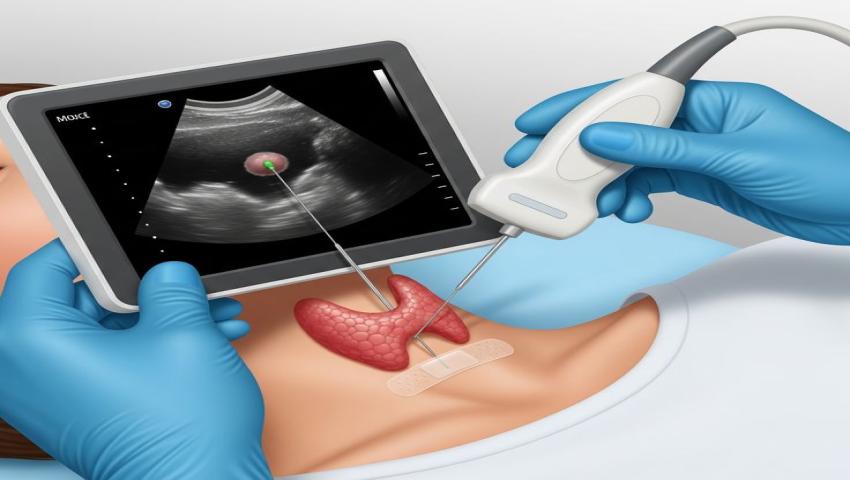
- Thyroid Ultrasound: This uses sound waves to see if a nodule is solid or fluid-filled.
- Fine Needle Aspiration (FNA) Biopsy: A very thin needle is used to take a few cells from the nodule to check for cancer under a microscope.
- Blood Tests: To check if your thyroid gland is producing too much or too little hormone.
- Nuclear Medicine Scan: Used occasionally to see if a nodule is “hot” (overactive) or “cold” (less active), as “cold” nodules have a slightly higher risk of being malignant.
Treatment Options for Thyroid Lumps:
If your lump is found to be benign, you may not need any treatment at all—just a “watch and wait” approach. However, if treatment is required, options include:
- Observation: Periodic ultrasounds to track the nodular lesion.
- Radioactive Iodine: Used if the nodule is causing an overactive thyroid.
- Surgery (Thyroidectomy): To remove a large nodule that makes it hard to breathe or swallow, or if cancer is confirmed.
- Advanced Cancer Treatment: If cancer is detected, Pratik Patil offers modern therapies, including targeted therapy and immunotherapy, at the Best Cancer Hospital in Pune.
Can Thyroid Cancer Be Cured If Detected Early?
Yes! Thyroid cancer has one of the highest cure rates of all cancers. When detected early, the survival rate is nearly 98% to 100%. Most types, such as Papillary Thyroid Cancer, grow very slowly, giving doctors plenty of time to treat them effectively. This is why early screening of a lump on the left side of the neck with no pain is so beneficial.
When Should You Consult Dr. Pratik Patil for a Thyroid Lump?
If you find a lump on the right side of the neck no pain or a lump near throat under chin, don’t wait for it to hurt. Most thyroid cancers are painless.
Consult Dr. Pratik Patil if:
- The lump is new and hasn’t gone away in 2 weeks.
- You have a family history of thyroid issues.
- You feel a persistent pressure in your neck.
As the Best Medical Oncologist in the region, Dr. Pratik Patil provides world-class care at Jupiter Hospital, Baner, ensuring you get an accurate diagnosis without unnecessary stress.
Conclusion:
The truth is that while a thyroid lump is worth investigating, it is rarely a cause for panic. Most benign thyroid lesions are just part of how our bodies change over time. However, staying proactive is key to peace of mind.
For expert evaluation and the best cancer treatment in Pune, trust the expertise of Dr. Pratik Patil. With over a decade of experience, he helps patients navigate their health journeys with precision and compassion.